What is Intense pulsed light therapy?
Intense pulsed light (IPL) therapy, also known as flash-lamp therapy, improves the appearance of aged and sun-damaged skin with high-intensity pulses of visible light. Intense pulsed light is a non-ablative and non-invasive therapy, meaning skin is neither removed nor damaged. Photo-rejuvenation is a skin treatment that uses IPL to rejuvenate the aged skin.
Intense pulsed light is used to improve the appearance of various skin problems including port wine stains, haemangioma, broken capillaries, varicose veins, rosacea, persistent red complexion, unwanted hair, age spots, sun spots, fine lines and wrinkles, mild to moderate acne and stretch marks.
Procedure of Intense pulsed light Therapy
Lasers and IPL systems both work on the same principle of absorption of light energy into a specific target cell with a color pigment called chromophore in the skin. The light energy then gets changed to heat energy that causes damage to the particular target area.
Intense pulsed light systems differ from lasers in that they emit many wavelengths in each pulse of light while lasers emit a single wavelength of light. Different filters are often used to refine the energy output and improve penetration without using extreme energy levels. This allows targeting of specific chromophores.
The intense light is delivered to the deeper parts of the skin (dermis), leaving the superficial surface of the skin (epidermis) undamaged. The advantage of IPL therapy is its minimum recovery time, the patient can return to work the same day. Before starting the procedure your doctor will explain the procedure and discuss the benefits of IPL therapy.
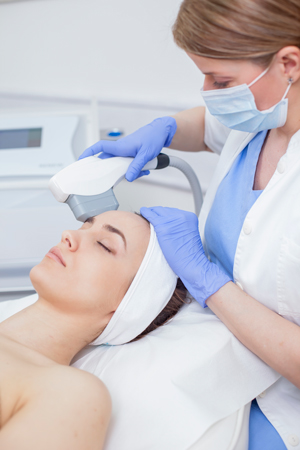
You may be asked to avoid exposure to the sun for a few weeks before and after treatment. A topical anesthetic cream may be used, but is generally not needed. A cold gel is normally applied to the area to be treated. You will be given protective eyewear to be worn throughout the procedure. Your doctor applies the smooth, glass surface of the IPL handpiece to the skin and the light is delivered to the skin surface in precise pulses. Each treatment session usually lasts about 20 minutes, and usually about 4-6 treatment sessions every 3-6 weeks would be required. You can return to normal activity immediately after the treatment session.
In general, IPL therapy is less painful compared to other facial rejuvenation treatments. However, a slight pinching sensation may be felt which may be distressing for some people. You may have slight pain during the procedure which can be reduced by contact cooling or using a topical anesthetic. Your skin may turn pink and look sore after the procedure. You may experience a sensation of sunburn for a few days after the treatment. Blistering, bruising, increased or decreased pigmentation and hair loss may also occur.
For more information about our services or to schedule an appointment, click here to request an appointment online. We’ll respond to you as soon as possible.