What is Laser Skin Resurfacing?
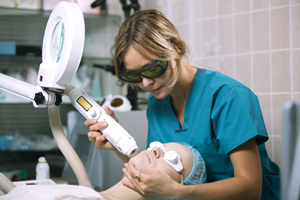
Laser skin resurfacing is a type of skincare procedure performed by a physician or dermatologist that involves the use of laser technology for facial rejuvenation to improve skin tone, texture, and coloration or treat minor facial defects and help your skin look younger and healthier. The procedure works by removing skin layer by layer with great precision. The new skin cells that develop during the healing process give the skin a firmer, smoother, younger-looking surface. Laser skin resurfacing can be performed as a solo procedure or with other cosmetic procedures on the face.
Indications for Laser Skin Resurfacing
Laser skin resurfacing can be used to:
- Improve fine lines or facial wrinkles including around your eyes, forehead, or mouth
- Improve sun-damaged or aged skin
- Improve non-responsive skin post facelift
- Improve scars from acne or chickenpox
- Enhance complexion in individuals with greyish or yellowish skin tones
- Remove skin irregularities such as warts
- Remove enlarged oil glands on the skin
- Improve birthmarks
Preparation for Laser Skin Resurfacing
Pre-procedure preparation for laser skin resurfacing may involve the following steps:
- A review of your medical history and a physical examination to check for any medical issues that need to be addressed prior to surgery.
- You may be advised to apply a topical retinoid on your skin for about 4 weeks prior to your procedure.
- Refrain from using medications such as minocycline or doxycycline that cause photosensitivity for at least 3 days before the procedure.
- Refrain from heavy sun exposure or tanning and use a broad-spectrum sunscreen daily for at least 4 weeks prior to treatment.
- You need to inform your physician if you have a history of shingles or herpes in the treatment area so that antiviral medication can be started both before and after treatment for a defined period.
- You need to inform your physician about any medications and supplements you are taking. You are required to avoid taking medications or supplements that can affect clotting such as ibuprofen, aspirin, or vitamin E for at least a week before the procedure.
- If you are a smoker, refrain from smoking for at least 2 weeks before and after the procedure as it can hinder the healing process.
- Arrange for someone to drive you home after the procedure as you may not be alert enough to drive yourself due to the effects of sedatives/anesthesia.
Procedure for Laser Skin Resurfacing
Laser skin resurfacing is usually performed as an outpatient procedure (same-day procedure) and hence, does not require an overnight stay in the hospital. During the procedure, you will be asked to lie down on your back on the procedure table, and for the treatment of smaller areas, your physician will use a local anesthetic to numb the treatment area. In case of a larger area, such as a full-face treatment, general anesthesia may be administered, along with sedatives to keep you comfortable and relaxed throughout the procedure.
During ablative laser resurfacing, your physician will direct an intense beam of light energy (laser) on your skin. The laser beam ablates (destroys) the external or outer layer of the skin (epidermis). Simultaneously, the laser energy heats up the underlying skin (dermis), which stimulates the production of collagen over time, resulting in improved skin tone and texture. Ablative laser resurfacing usually takes about 30 minutes to 2 hours, based on the type of technique (CO2 or Erbium laser) being used and the size of the treatment area. Recovery from ablative laser resurfacing may take about 1 to 2 weeks.
If you are undergoing non-ablative laser treatment, a series of treatments is normally scheduled over the course of weeks or months. Non-ablative laser resurfacing is less invasive and requires less recovery time than ablative laser resurfacing, but is less effective.
Post-procedure Care and Recovery
Following laser skin resurfacing, it is normal for the treated skin to be raw, swollen, and itchy. A thick ointment is applied to the treatment area and covered with a watertight and airtight bandage for protection and to promote healing. Pain medicines and cool compresses are prescribed to address pain, swelling, and for additional comfort. It takes about 2 weeks for the new skin to develop over the treatment area. During this period, do not apply products that may irritate your skin such as cosmetics. Refrain from activities such as swimming for a defined period as it may increase your risk of infection. Wound care instructions will also include the application of petroleum jelly for 2 to 3 weeks on the treatment area to prevent scab formation and moisturizers to keep your new skin well moisturized.
Risk and Complications
Laser skin resurfacing is a relatively safe procedure; however, as with any procedure, some risks and complications may occur, such as:
- Swelling
- Burning
- Rash
- Bumps
- Redness
- Scars
- Infection
- Hyperpigmentation
For more information about our services or to schedule an appointment, click here to request an appointment online. We’ll respond to you as soon as possible.